
New board, new chairwoman, new ideas
The new ICN board chairwoman in an interview
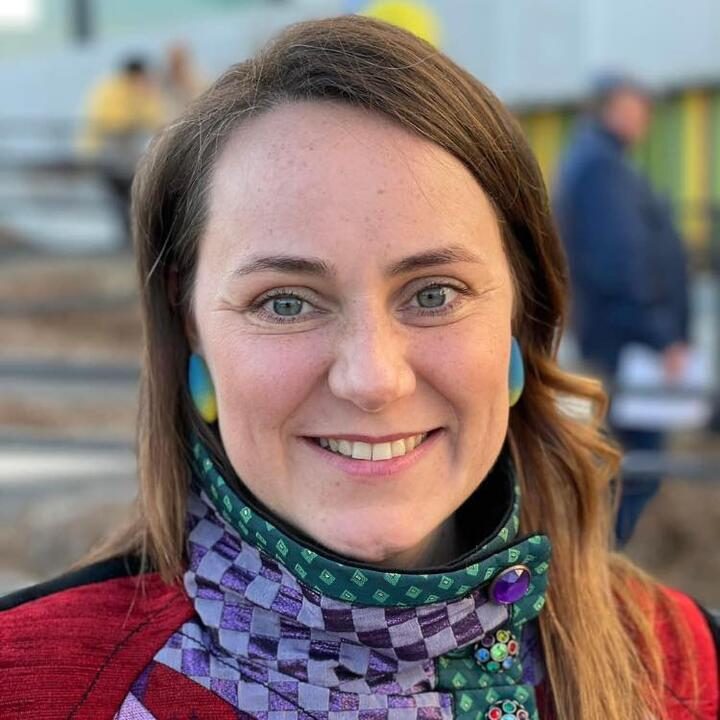
Triin Pärna has lived all her life in the small town of Türi in Estonia. She started to work as a teacher before she found her professional happiness working in the local government. For almost 20 years she works with subjects as education, youth, culture and sports and takes responsibility for the social sector. Also, creating added value through project work and applying for financial means is part of her job. Besides work, the 43-year-old woman loves an active lifestyle. "I dance, run, dive. I love to read and do crafts. But m y priority at this stage of life are my three children and to spend time with them", says Triin Pärna.
Since September 2023 she is leading the ICN board as the new Chairwoman. In an interview, Triin reveals how she became an ICN member and where she sees the network in the future.
How did you get to know IC network and since when are you a part of it?
I have been part of the IC network from the beginning and even before that, I was the project manager on the Estonian side in the PIPE and Innovation Circle project.
Why did you join ICN? What is in your eyes the strength of this network?
Türi joined the IC network because we saw a possible long-term cooperation with reliable, familiar partners to solve common problems and challenges. I see shared values, reliable relationships between organizations and individuals, openness as the strength of the network.
What are the biggest challenges your region is facing right now?
The biggest challenges in Estonia and Türi are all related to the environment and sustainability, just like in other parts of the world. How to really live and behave in such a way that life is possible apart from us? On the other hand, the aging of the population, the lack of services and ensuring their quality in rural areas, the growing quality of life and wage gap. Organizing the school network is an emotional and complex issue everywhere in Estonia, which local governments have to deal with, although the number of students has decreased over the years, there are not enough teachers or support staff, and running all the existing schools is beyond the capacity of the municipalities. We can certainly learn from other countries here, whether and how it can be done differently and better.
To what extent has your region benefited from the IC network? What are current projects in your regions that other regions could learn from?
In recent years, Türi has not been an active partner in projects, there has been political instability, change of managers, setting of priorities. In previous projects, we have prioritized the cooperation of youth, community and business and joint contribution to the home.
Where do you see ICN in ten years?
The continuation and survival of the IC network even after 10 years depends on each individual partner and glue. There are more active times and quieter times - ups and downs that are a natural part of any organization, including the IC network.
Cooperation is based on persons and the relationships between them, understanding, sufficient equity and similar values. If on its surface an opportunity is found through projects to jointly accept challenges at home, learn from each other and find solutions and development opportunities, then I see no reason why the IC should not be viable even in 10 or 20 years. There is power in cooperation!
--
________________________
Media Manager & Freelance Journalist
mobile +49 177 3012441
E-mail: schmidt.christin@gmail.com
More from the network

30 August 2026
Welcome to Edinburgh!
ICN 2026 - 10-11 November
Planning Aid Scotland will host the Innovation Circle Network gathering 2026. The program will focus on various projects and cooperation, with EU fund…
Read more
12 August 2026
ICN 2026 - Edinburgh
Get ready for the ICN 2026, 10-11 November in Edinburgh. More info will follow soon..
Read more
19 August 2025
World cafe in Bialystok
ICN annual meeting in cooperation with FCIS 15 years anniversary
22-24 October there will be an event in Bialystok, focusing on social innovations and especially in Poland, an exploring the FCIS strategy 2030. FCIS…
Read more